Does decaf coffee have caffeine? Yes — here are the numbers
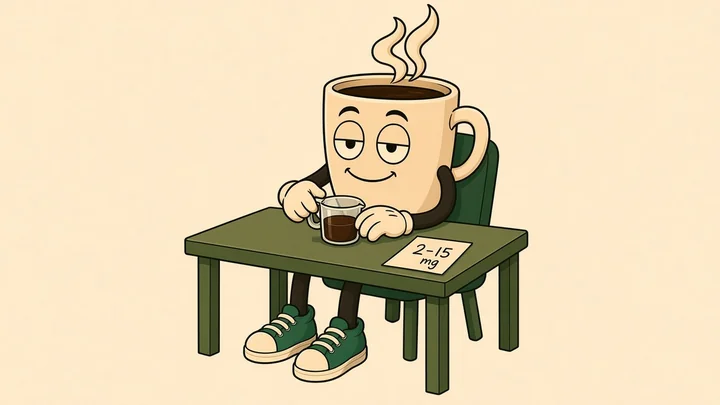
Yes — decaf coffee still has caffeine. It is not caffeine-free. The U.S. Food and Drug Administration says an 8-fluid-ounce cup of decaf typically has about 2 to 15 mg of caffeine, versus roughly 95 mg in a same-size cup of regular coffee. Decaffeination removes most of the caffeine from the green beans (typically about 97% or more), but a little always stays behind. How much ends up in your mug depends on the beans, the brew, and the cup size.
That is the short answer. The rest of this post is for people who want the numbers, the sources, and a practical way to keep total caffeine low without giving up coffee. If you came here from a late-night search: you are not alone, and you do not need a chemistry degree to shop for decaf that fits how sensitive you actually are.
What “decaf” legally means
In everyday English, “decaf” sounds like “the caffeine is gone.” In coffee, it means “most of the caffeine was removed before roasting.” U.S. rules and industry practice treat coffee as decaffeinated when the process removes the large majority of caffeine from the green bean — commonly cited as about 97% or more — not 100%. The National Coffee Association puts it the same way: once caffeine is removed to that level, the beans are washed, steamed, and roasted; a small amount can remain.
So the label is accurate and still slightly annoying. Decaf is low-caffeine coffee, not zero-caffeine water that somehow tastes like coffee. If a medical plan says “no caffeine,” talk to your clinician before treating decaf as a free pass — residual caffeine is real, and other foods (chocolate, tea, some sodas, some meds) add up too.
How much caffeine is in decaf coffee?
Two useful reference points:
- FDA consumer guidance: decaf coffee typically has 2–15 mg of caffeine in an 8 fl oz cup. That range is the one we quote first because it is official, public, and written for shoppers — not lab jargon. Source: FDA, “Spilling the Beans: How Much Caffeine is Too Much?”.
- USDA FoodData Central: for “Coffee, brewed, decaffeinated,” caffeine is listed at about 1 mg per 100 g of brew (roughly ~2 mg in an 8 fl oz mug if you scale by weight). Regular brewed coffee is listed much higher (about 40 mg per 100 g, which lands near ~95 mg per 8 fl oz). Numbers vary by sample and method; treat USDA as a lab baseline, not a promise from your local café. Browse entries via USDA FoodData Central.
A 2006 Journal of Analytical Toxicology study (McCusker et al.) measured caffeine in purchased “decaffeinated” drinks and found a spread: 0–13.9 mg per 16 oz across ten outlets in one phase, and Starbucks brewed decaf samples around 12.0–13.4 mg per 16 oz, with decaf espresso shots ranging about 3.0–15.8 mg per shot. That paper is why café decaf can surprise people who assumed every cup sat at the bottom of the FDA range. DOI: 10.1093/jat/30.8.611.
Takeaway: plan on a few milligrams to the mid-teens per small cup, and more if the cup is larger, the brew is strong, or you stack shots. “About zero” is marketing poetry. “Low, but not nothing” is the accurate, boring truth we prefer.
Comparison: caffeine in common drinks
Figures below are typical published values for comparison — not a lab assay of the bag in your pantry. Cup sizes differ across sources; we note the serving each number refers to.
| Drink | Serving | Typical caffeine | Source |
|---|---|---|---|
| Decaf coffee, brewed | 8 fl oz | 2–15 mg | FDA consumer update |
| Regular coffee, brewed | 8 fl oz | ~95 mg (USDA-scaled); cafés often higher | USDA FoodData Central; FDA notes wide ranges in larger cups |
| Regular coffee (FDA table) | 12 fl oz | 113–247 mg (non-specialty brewed) | FDA (citing 2015 Food and Chemical Toxicology exposure work) |
| Black tea, brewed | ~8 fl oz (per 100 g ≈ 20 mg) | ~20 mg / 100 g brew | USDA FoodData Central (black tea, brewed) |
| Green tea, brewed | ~8 fl oz (per 100 g ≈ 12 mg) | ~12 mg / 100 g brew | USDA FoodData Central (green tea, brewed, regular) |
| Black tea (FDA table) | 12 fl oz | ~71 mg typical | FDA consumer update |
| Green tea (FDA table) | 12 fl oz | ~37 mg typical | FDA consumer update |
| Decaf espresso (study sample) | 1 shot | ~3–16 mg | McCusker et al., 2006 |
One awkward implication: a large café decaf can land in the same ballpark as a small cup of tea. If tea keeps you up and “just a decaf” somehow does too, the milligrams may explain it better than mystery vibes.
Why a little caffeine remains
Caffeine is water-soluble and stubborn. Every major decaf method — Swiss Water, Mountain Water, sugarcane (ethyl acetate), CO₂, methylene chloride — pulls most of it out of green coffee, then the beans are dried and roasted. None of the common commercial processes claim a perfect wipe. Process choice changes flavor and whether a solvent touches the bean; it does not turn coffee into herbal tea.
We keep a plain-language process guide on the site if you want the “how it works” version: how decaf is made. For shopping by method, start with Swiss Water decaf, solvent-free / chemical-free decaf, or sugarcane (EA) decaf.
Does brew method change the number?
Yes, within a range. More grounds, finer grind, hotter water, longer contact time, and larger servings all tend to extract more of whatever caffeine is left in the bean. Espresso concentrates a small volume; drip and immersion fill a bigger mug. Instant decaf is its own category (often very low, but still check the brand). The FDA’s 2–15 mg figure is a typical cup range, not a law of physics for every recipe.
If you are caffeine-sensitive, consistency helps more than obsessing over one milligram: same beans, same dose, same brew. Then notice how you sleep. Your body is the final instrument.
How many cups of decaf equal one regular?
Rough math only: if regular is ~95 mg and decaf is ~5–10 mg in an 8 oz cup, you are looking at roughly 10–20 cups of light-side decaf to match one regular cup — which matches the “more than ten cups” framing used in public explainers. Push decaf toward the high end of the FDA range, or pour 16 oz café cups, and the ratio shrinks. Stack three large café decafs in an afternoon and you can quietly drink a regular-coffee-sized caffeine budget without feeling like you “had coffee.”
FDA’s broader adult guidance is that about 400 mg of caffeine per day is an amount not generally associated with negative effects for most healthy adults — with big individual variation, and separate advice if you are pregnant, trying to conceive, breastfeeding, or on interacting medications. Decaf makes that budget easier to stay under. It does not delete caffeine from the ledger.
Checklist: keep decaf truly low-caffeine for you
- ☐ Decide your goal: “less jitter” vs “clinically caffeine-restricted.” Those are different bars.
- ☐ Prefer bags that name the process (Swiss Water, Mountain Water, sugarcane, CO₂, etc.) so you know what you bought — browse the decaf directory.
- ☐ Watch serving size. A 16 oz café “decaf” is two small cups of whatever residue is in there.
- ☐ Count other sources the same day: tea, chocolate, cola, pre-workout, pain relievers with caffeine.
- ☐ If you are highly sensitive, test one cup earlier in the day before committing to evening decaf.
- ☐ Ask the café how they brew decaf (dedicated grinder? shared portafilter?). Cross-contact is a real-world annoyance, not a conspiracy.
- ☐ When a bag just says “decaf” with no process, ask the roaster — or filter our listings for solvent-free picks on chemical-free decaf.
What top results usually cover — and what they skip
Search “does decaf coffee have caffeine” and you will mostly see the same correct headline: yes, a little. FDA and the National Coffee Association pages nail the 2–15 mg / ~97% story. Mayo Clinic-style charts help compare drinks. Brand pages often reassure you with a single “about 2 mg” line.
What they often skip: café variability (that McCusker spread), how a 16 oz cup changes the math, process shopping without turning into a chemistry lecture, and linking you to beans you can actually buy. That last gap is why we built a directory. Personality optional. Milligrams mandatory.
Where to shop next on decafaf
If you want low caffeine and a process you recognize:
- Swiss Water decaf — water and carbon filtration; our solvent-free default for a lot of shoppers.
- Mountain Water decaf — another water-process option.
- All solvent-free / chemical-free decafs we list.
- Decaf coffee brands — every roaster in the directory, so you can stalk one shop’s whole decaf lineup.
- Individual favorites people actually click: Volcanica, Counter Culture, Onyx, Stumptown, Olympia Coffee.
Prices and availability change; we pull from roaster pages and link out so you can confirm before you buy.
FAQ
Does decaf coffee have caffeine?
Yes. FDA guidance puts a typical 8 oz cup of decaf around 2–15 mg of caffeine — far less than regular coffee, but not zero.
Is decaf coffee caffeine-free?
No. “Decaffeinated” means most caffeine was removed (often ~97%+), not that every milligram is gone.
How much caffeine is in a cup of decaf?
Plan on roughly 2–15 mg per 8 fl oz per FDA. Larger café cups and stronger brews sit toward the high end or above that small-cup range.
Can decaf coffee keep you awake?
If you are sensitive, multiple large decafs, late timing, or leftover caffeine from other foods can still add up. Most people tolerate typical decaf better than regular.
Does Swiss Water decaf have less caffeine than other methods?
All major methods aim for very high caffeine removal. Process mainly changes flavor and whether a solvent was used — not a guaranteed race to absolute zero.
Related: How decaf is made · Swiss Water decaf · Decaf directory